When manufacturers evaluate digital printing for mass production, the first question is practical: is digital printing cost effective for mass production? The answer depends on volume, artwork variation, turnaround time, and finishing requirements. A simple unit-price comparison can mislead. Digital printing may cost more per sheet, yet eliminate plates, reduce setup waste, and support short production runs. That difference matters when demand changes quickly.
Frank Romano, a respected printing industry educator and professor emeritus at the Rochester Institute of Technology, has stated, “Digital printing is not a replacement for offset; it is a complement to offset.” His observation remains useful when comparing production methods. Offset may win at very high volumes with stable artwork. Digital printing can perform better when a campaign needs several versions, personalized content, or frequent reprints. The real calculation should include setup, labor, inventory, paper waste, maintenance, and delivery time.
This outline will examine each cost layer with measurable examples. A buyer could compare 100,000 identical brochures with 10,000 copies across ten localized versions. The results may differ sharply. Track ink coverage, substrate, finishing, and machine speed. Ask for test runs. Inspect the sheets, not only the quotation. Digital output can look efficient on paper, but finishing delays may change the result. That is an uncomfortable point. Cost models are useful, yet they are never perfect. Actual demand, operator experience, and equipment condition can alter the final cost.
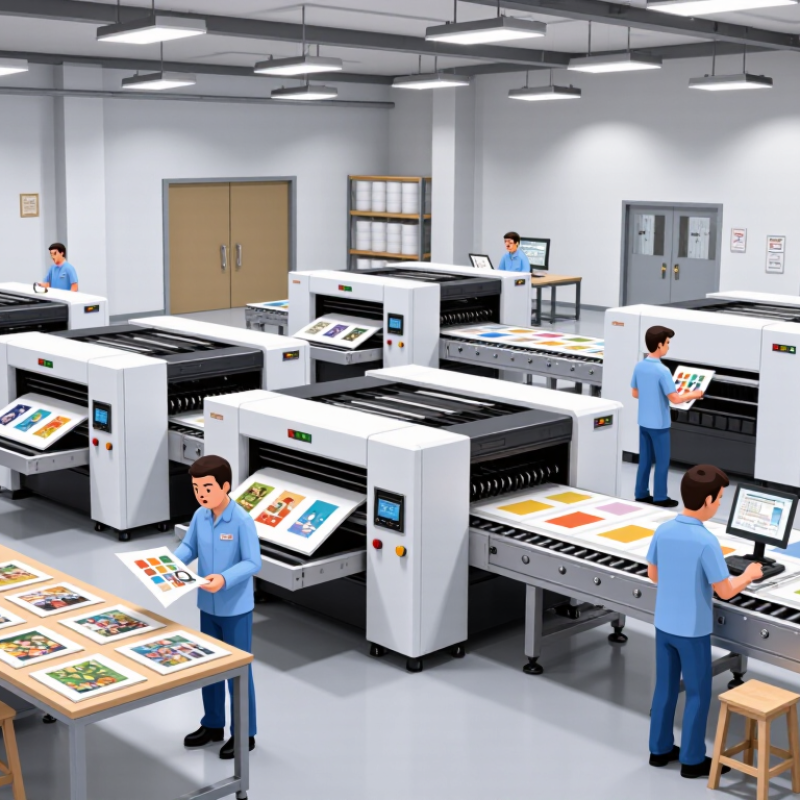
Define the production scope before comparing digital printing costs. Record the number of SKUs, total units, finished size, substrate, colors, and variable-data needs. Include finishing requirements, packaging, delivery dates, and acceptable waste. A 10,000-unit order with five designs behaves differently from one 50,000-unit design.
Smithers reported that the digital packaging print market reached approximately $22.9 billion in 2023. It forecasts growth to about $36.9 billion by 2028, showing stronger demand for shorter, more customized runs. This trend makes setup reduction valuable, but volume alone does not prove digital printing is cheaper. Compare the complete cost per saleable unit. Include media, ink, labor, maintenance, energy, finishing, inspection, reprints, and freight. Keep samples from the same substrate and finishing process.
Use a pilot run when possible. Measure actual yield and turnaround time. Do not rely only on a supplier’s click charge. Our first spreadsheet is often too clean. It may ignore spoilage near the roll end or extra inspection hours. That weakness deserves attention. The Print Industries Market Information and Research Organization has repeatedly emphasized production efficiency and workflow control in benchmarking studies. Track setup minutes, rejected sheets, and operator interventions. Then compare digital production with the existing method under identical specifications, not ideal assumptions.
| Production Scope | Print Specification | Typical Digital Press Setup | Estimated Unit Cost | Estimated Total Print Cost | Typical Turnaround | Cost Considerations |
|---|---|---|---|---|---|---|
| 1,000 finished pieces | A4, single-sided, full color, 120 gsm coated paper | 4/0 color digital printing; standard trimming | US$0.18–US$0.35 | US$180–US$350 | 1–3 business days | Setup and file-preparation charges have a strong impact at low volume. |
| 5,000 finished pieces | A4, single-sided, full color, 120 gsm coated paper | 4/0 color digital printing; standard trimming | US$0.11–US$0.22 | US$550–US$1,100 | 2–4 business days | Unit cost decreases as fixed prepress and setup charges are distributed. |
| 10,000 finished pieces | A4, double-sided, full color, 120 gsm uncoated paper | 4/4 color digital printing; collating included | US$0.12–US$0.24 | US$1,200–US$2,400 | 3–5 business days | Double-sided coverage, toner or ink usage, and paper weight affect pricing. |
| 25,000 finished pieces | A4, double-sided, full color, 120 gsm uncoated paper | 4/4 color digital printing; automated collating | US$0.08–US$0.16 | US$2,000–US$4,000 | 4–7 business days | A quote should confirm production capacity, paper availability, and quality tolerances. |
| 50,000 finished pieces | A4, double-sided, full color, 120 gsm uncoated paper | 4/4 color digital printing; batch production and automated finishing | US$0.06–US$0.12 | US$3,000–US$6,000 | 5–10 business days | At higher volumes, compare digital production with offset printing for the lowest possible unit cost. |
| 10,000 finished booklets | A5 booklet, 16 pages, full color, 100 gsm text paper | 4/4 color interior; saddle stitching; cover included | US$0.65–US$1.30 | US$6,500–US$13,000 | 5–10 business days | Page count, cover stock, imposition, binding, and paper grain direction are major cost drivers. |
| 5,000 personalized pieces | A4, single-sided, full color, variable recipient data | 4/0 color digital printing; data merge; standard trimming | US$0.20–US$0.40 | US$1,000–US$2,000 | 3–6 business days | Data cleansing, proofing, secure file handling, and variable-image processing add production cost. |
| Comparison checklist: confirm finished size, page count, color coverage, one-sided or two-sided printing, paper type and weight, finishing method, personalization requirements, quantity tolerance, delivery location, proofing needs, and required delivery date before comparing quotations. | ||||||
Record SKUs, quantities, finished size, substrate, colors, variable data, finishing, packaging, delivery, and acceptable waste.
It excludes labor, materials, maintenance, energy, inspection, reprints, finishing, and freight. The apparent bargain may fade quickly.
Divide total production costs by saleable units, not printed sheets. Include waste, trimming, packing, and delivery.
Watch for calibration sheets, test runs, file corrections, cleaning, downtime, storage, software, rent, and quality-control labor.
Fixed setup costs spread across larger orders. A small batch may cost more per unit.
Request quotes at 1,000, 5,000, 25,000, and 100,000 units. These points reveal changing cost patterns.
Finishing, inspection, and packing may become bottlenecks. A fast printer does not guarantee fast delivery.
Yes, when practical. Measure actual yield, waste, operator time, and turnaround. The spreadsheet may look too clean.
A 3% to 8% allowance can be practical, depending on the substrate and finishing. Measure real waste carefully.
It can suit frequent design changes, shorter runs, and lower inventory risk. The lowest quote is not always the lowest usable cost.
Comparing digital printing costs for mass production begins with clearly defining the production scope, including order quantity, material type, print size, color requirements, quality standards, and delivery schedule. A complete cost review should include both direct expenses, such as ink, media, labor, and machine operation, and indirect costs, such as maintenance, setup time, energy use, quality control, waste, and finishing. These factors provide a more accurate picture than the initial printing price alone.
To determine is digital printing cost effective for mass production, businesses should compare the cost per unit at different order volumes and evaluate how expenses change as production scales. Equipment capacity, operator efficiency, material consumption, finishing requirements, and turnaround time should all be considered. The most cost-efficient method is the one that balances unit price, consistent quality, production flexibility, waste reduction, and reliable delivery while meeting the project’s technical and commercial requirements.

 Axis Print