Choosing among China’s top 10 digital printers requires more than comparing speed, resolution, or purchase price. Manufacturing buyers need evidence that a printer can survive daily production, variable substrates, and demanding delivery schedules. Smithers estimates that the global digital print market could grow from approximately $136.7 billion in 2023 to $230.5 billion by 2028. That growth signals opportunity, but it also increases equipment choices and purchasing risks.
The real question is what to consider when buying a digital printer for manufacturing. Marco Boer, vice president of IT Strategies, offers a practical principle: “Start with the application, not the machine.” Buyers should test actual materials, including coated cartons, labels, films, metal sheets, or textured boards. A showroom sample may look impressive. Your factory floor may disagree. Examine throughput at production quality, ink adhesion, drying time, color consistency, automation, software compatibility, maintenance access, and local technical support. Total cost matters more than the quoted price. Include ink, printheads, energy, waste, labor, downtime, and replacement parts.
Keypoint Intelligence’s production-print research also emphasizes workflow integration and uptime as important purchase factors. Yet no report can fully predict your operators, climate, substrate mix, or shift pattern. That is where many buying guides become too confident. A perfect printer does not exist. The strongest shortlist combines documented test results, customer references, service-level commitments, and a realistic return-on-investment model. This guide compares ten leading Chinese digital printers through that practical manufacturing lens, while recognizing that lower cost may sometimes hide higher operational complexity.
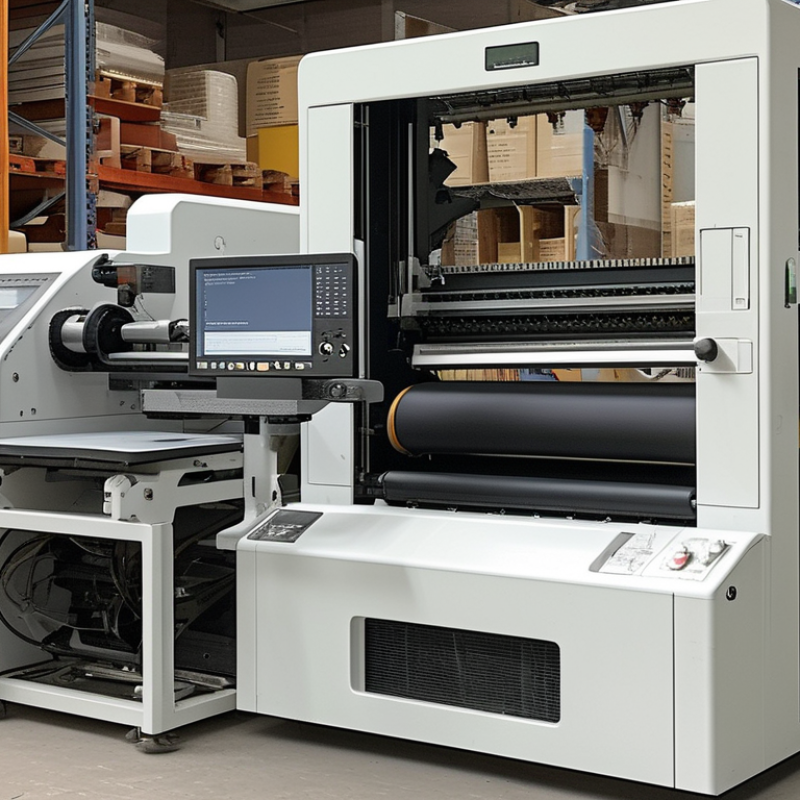
Digital printing technology shapes every buying decision. Inkjet systems spray liquid ink directly onto paper, film, fabric, or specialty media. They handle vivid images, variable data, and short runs with little setup. Toner machines use heat to bond dry particles onto sheets. They often deliver sharper text and stable results on office-grade stock.
The difference matters. Inkjet can reduce waste during personalized production, especially when images change from page to page. However, humidity, ink absorption, and nozzle maintenance can affect consistency.
Toner usually starts quickly and performs well for brochures, invoices, and compact commercial jobs. Its heat may limit some sensitive materials. A practical test is essential. Print skin tones, small text, solid black areas, and fine lines on your actual media.
The 2024 market showed continued growth in digital printing, supported by packaging demand, customized products, and faster short-run orders. China remains important because its manufacturing network supports equipment, components, and service development. Still, market growth does not guarantee a suitable purchase. Check monthly volume, running cost, drying time, color control, and local technical support. Ask for measured samples, not attractive showroom pages. Measure the waste. A cheaper machine may cost more through cleaning cycles, downtime, or specialist consumables. There is no perfect choice. Even experienced buyers can underestimate operator training and workflow integration.
China’s top 10 digital printers cover different production needs, from compact office units to high-volume industrial systems.
The leading profiles include an A3 color printer, a cut-sheet production press, a monochrome document printer, a roll-to-roll wide-format printer, a flatbed signage printer, a label printer, a textile printer, a UV flatbed printer, a photo printer, and an entry-level multifunction model. Each category uses different technologies and targets different workloads.
Core specifications deserve careful comparison. Check print speed, maximum resolution, monthly duty cycle, media thickness, sheet size, ink or toner capacity, and color management options.
For packaging work, accurate registration and substrate handling matter more than impressive headline speed. For posters, drying performance and outdoor durability are critical.
A production press may support 70 to 120 pages per minute, while a compact model may deliver sharper detail at a slower pace. Specifications can look excellent on paper. Real output may differ.
Tips:
Request a physical sample before ordering. Test gradients, small text, dark solids, and uneven paper.
Confirm local service coverage, spare-part availability, software compatibility, and operator training. Ask for power requirements and maintenance intervals.
Calculate total cost per page, not only the purchase price. I would also inspect noise and waste levels, because these practical details are easy to overlook.
No machine fits every workshop. A lower-cost model may become expensive when downtime increases.
When comparing China’s top digital printers, start with measurable print quality, not brochure claims. Resolution between 1,200 and 2,400 dpi can produce sharp text, smooth curves, and cleaner fine lines. Yet higher dpi does not guarantee better output. Ink control, screening technology, paper surface, and mechanical stability matter equally.
I recommend testing a real production file before buying. Include small type, skin tones, gradients, solid blacks, and thin white lines. Inspect the sheet under neutral lighting and a magnifying loupe. Check registration errors along the edges. A printer may look excellent on coated stock but lose detail on textured paper. That difference matters in daily work.
Color accuracy requires more than attractive samples. Ask for measured Delta E results, ICC workflow details, and calibration frequency. A stable machine should repeat the same color after several hours, not only on a fresh morning test. I once trusted a vivid sample too quickly; later, neutral gray shifted slightly across the sheet. That flaw was easy to miss. It changed the buying decision.
A 2,400 dpi system may suit detailed labels, photographs, or premium graphics. A well-tuned 1,200 dpi printer can perform better for routine commercial pages. Compare output speed, waste during calibration, and maintenance-related downtime. Keep a printed reference chart. Small differences become obvious over time. Reliability shows in repeated batches, not one impressive sample.
When comparing China’s top 10 digital printers, print speed is only the starting point. A rated output of 30–100 pages per minute can look impressive, but specifications often use simple, standard-sized pages. Real productivity changes with color coverage, paper weight, duplex printing, and finishing tasks. A 60 ppm machine may slow noticeably when processing dense images or mixed media.
Duty cycle shows how much work a printer can handle each month. It should not be treated as a daily target. A reliable purchasing review compares the recommended monthly volume with your actual workload, including seasonal peaks. For example, a print room producing 80,000 pages monthly needs operating space above that figure. Running near the limit may increase maintenance visits and shorten component life. Leave room.
I have seen teams choose speed and overlook workflow delays. That was a costly mistake. Warm-up time, job preparation, media changes, and operator intervention can reduce hourly output. Test representative files before buying, including invoices, brochures, and full-bleed graphics. Measure finished pages, not just engine speed. Ask for documented duty-cycle data, service procedures, and sample prints from the same paper stock. Some specifications remain unclear until real production begins.
When comparing China’s top ten digital printers, purchase price is only the visible part of ownership cost. Ask suppliers for tested ink or toner yield under your real coverage, not a brochure’s ideal page count. A machine printing dense packaging artwork may consume far more than standard office pages. Request sample runs using your paper, images, and coverage levels. Record cartridges or tanks used per 10,000 pages. Small differences become large invoices. Very quickly.
Energy use deserves a meter, not a guess. Measure startup peaks, standby draw, and average consumption during production. A printer running eight hours daily can add meaningful costs through heating, cooling, and ventilation. Maintenance data matters equally. Check scheduled service intervals, cleaning cycles, replacement parts, and technician response times in your region. Ask how often printheads, rollers, belts, or fusers typically require replacement. Experienced operators keep a fault log. It exposes recurring stoppages that sales demonstrations rarely show.
Calculate ROI with contribution margin, not page volume alone. Include labor, rejected sheets, finishing delays, software fees, electricity, and financing. Compare monthly cost per sellable page against current outsourcing prices. A simple spreadsheet can test low, normal, and peak workloads. Be honest about weak assumptions. My early estimates often ignored operator training and wasted media. That mistake changed the payback period. Before signing, run a documented trial and obtain written yield, warranty, service, and uptime terms. Reliable evidence beats confident promises.
| Anonymous Printer Profile | Print Technology | Recommended Monthly Volume | Rated Speed | Consumable Yield Basis | Typical Consumable Cost | Energy Use During Production | Annual Maintenance Allowance | Typical Service Life | Indicative Payback Period | Best-Fit Application |
|---|---|---|---|---|---|---|---|---|---|---|
| Profile 01 | Desktop aqueous inkjet | 500–3,000 A4 pages | 8–18 ppm | Black: 500–1,200 pages Colour set: 300–800 pages |
US$0.08–0.22/page | 0.02–0.06 kWh/hour | US$100–300 | 3–5 years | 12–24 months | Home offices, proofing, low-volume documents |
| Profile 02 | Business colour laser | 3,000–15,000 A4 pages | 25–45 ppm | Black: 5,000–15,000 pages Colour: 3,000–10,000 pages |
US$0.07–0.16/page | 0.25–0.65 kWh/hour | US$250–700 | 5–7 years | 10–20 months | Office reports, marketing materials, internal communications |
| Profile 03 | Production colour toner | 15,000–80,000 A4 pages | 45–75 ppm | Black: 35,000–70,000 pages Colour: 20,000–50,000 pages |
US$0.05–0.13/page | 1.2–3.0 kWh/hour | US$1,500–4,000 | 5–7 years | 18–36 months | Short-run commercial print, transactional documents |
| Profile 04 | High-speed monochrome toner | 30,000–150,000 A4 pages | 70–110 ppm | Black: 50,000–100,000 pages | US$0.015–0.05/page | 1.5–3.5 kWh/hour | US$2,000–5,000 | 6–8 years | 14–30 months | Books, invoices, statements, high-volume text |
| Profile 05 | Sheet-fed production inkjet | 30,000–250,000 A4 pages | 60–150 ppm | Ink yield varies by coverage; quoted by image area | US$0.025–0.09/page | 2.0–6.0 kWh/hour | US$3,000–8,000 | 6–8 years | 24–48 months | Variable-data work, direct mail, short-run colour production |
| Profile 06 | Continuous-feed inkjet | 250,000–2,000,000 A4 pages | 100–300 m/min | Ink yield varies by coverage and substrate | US$0.015–0.06/page | 5.0–15.0 kWh/hour | US$8,000–25,000 | 7–10 years | 30–60 months | Publishing, direct mail, utility bills, mass personalization |
| Profile 07 | UV flatbed inkjet | 1,000–20,000 m² annually | 20–80 m²/hour | Ink usage depends on coverage; typically measured in ml/m² | US$1.50–6.00/m² for ink | 2.0–8.0 kWh/hour | US$2,000–7,000 | 5–8 years | 18–42 months | Rigid boards, signage, packaging prototypes, décor panels |
| Profile 08 | Eco-solvent wide-format inkjet | 500–8,000 m² annually | 15–45 m²/hour | Ink usage depends on coverage; typically measured in ml/m² | US$0.70–3.00/m² for ink | 0.4–1.8 kWh/hour | US$1,000–4,000 | 5–7 years | 18–36 months | Outdoor graphics, vehicle graphics, posters, banners |
| Profile 09 | Sublimation transfer inkjet | 500–10,000 m² annually | 20–80 m²/hour | Ink usage depends on coverage; transfer paper is an additional cost | US$1.00–4.50/m² for ink and transfer media | 0.5–2.5 kWh/hour | US$1,000–4,500 | 4–7 years | 18–40 months | Textiles, sportswear, soft signage, promotional products |
| Profile 10 | Industrial label inkjet | 100,000–1,500,000 linear metres annually | 30–75 m/min | Ink usage depends on coverage, resolution, and substrate | US$0.01–0.08/label-equivalent | 1.0–4.0 kWh/hour | US$3,000–12,000 | 5–8 years | 24–48 months | Short-run labels, versioned packaging, barcodes, product labels |
| Evaluation note: The figures are representative planning ranges for comparable digital-printing equipment and are not tied to any specific manufacturer or brand. Actual ownership cost depends on page coverage, substrate, print mode, local electricity rates, service contracts, operator time, installation, financing, and downtime. ROI should be calculated using total cost of ownership: purchase price + consumables + energy + maintenance + labour + expected downtime, divided by the number of sellable pages or square metres. | ||||||||||
: Options include compact office units, production presses, wide-format systems, label printers, textile printers, and photo printers. A flatbed model suits rigid signs. A roll-to-roll model suits banners and long media.
Compare speed, resolution, monthly duty cycle, media thickness, sheet size, ink or toner capacity, and color controls. Do not trust speed alone. Real output may differ.
Request physical samples using your paper, images, and actual coverage levels. Test gradients, small text, dark solids, and uneven sheets. Watch the output closely.
Ask for tested yield under your real coverage, not ideal brochure conditions. Record cartridges or tanks used during a 10,000-page sample run. Dense artwork can consume much more material.
Measure startup peaks, standby draw, and average production use with a power meter. Heating, cooling, and ventilation may increase daily expenses. Eight hours matters.
Confirm cleaning cycles, service intervals, replacement parts, and local technician response times. Ask about printheads, rollers, belts, and fusers. Keep a fault log. It reveals repeated stoppages.
Include labor, rejected sheets, finishing delays, software fees, electricity, financing, and maintenance. Compare monthly costs per sellable page with outsourcing prices. Page volume alone is misleading.
Check noise, waste levels, power requirements, software compatibility, operator training, and spare-part access. A cheaper machine may cost more during downtime. My early estimates ignored training and wasted media. That changed the payback period.
Choosing among China’s top 10 digital printers requires more than comparing prices. This guide explains the differences between inkjet and toner technologies, including their strengths, application ranges, and connection to the digital printing market’s 2024 growth. It also outlines key specifications to compare, such as print resolution, color accuracy, media compatibility, and practical output levels ranging from 30 to 100 pages per minute. Understanding what to consider when buying a digital printer for manufacturing can help businesses match equipment to production volume, product requirements, and workflow demands.
The summary also examines ownership costs, including ink or toner yield, energy consumption, maintenance frequency, expected duty cycle, and long-term return on investment. A printer with 1,200–2,400 dpi may deliver excellent detail, but overall value depends on consistent quality, reliable productivity, manageable operating expenses, and serviceability. By evaluating these factors together, buyers can select a system that supports efficient manufacturing while balancing performance, durability, and total cost of ownership.

Axis Print